
Poriyal (stir-fry) with Swiss Chard
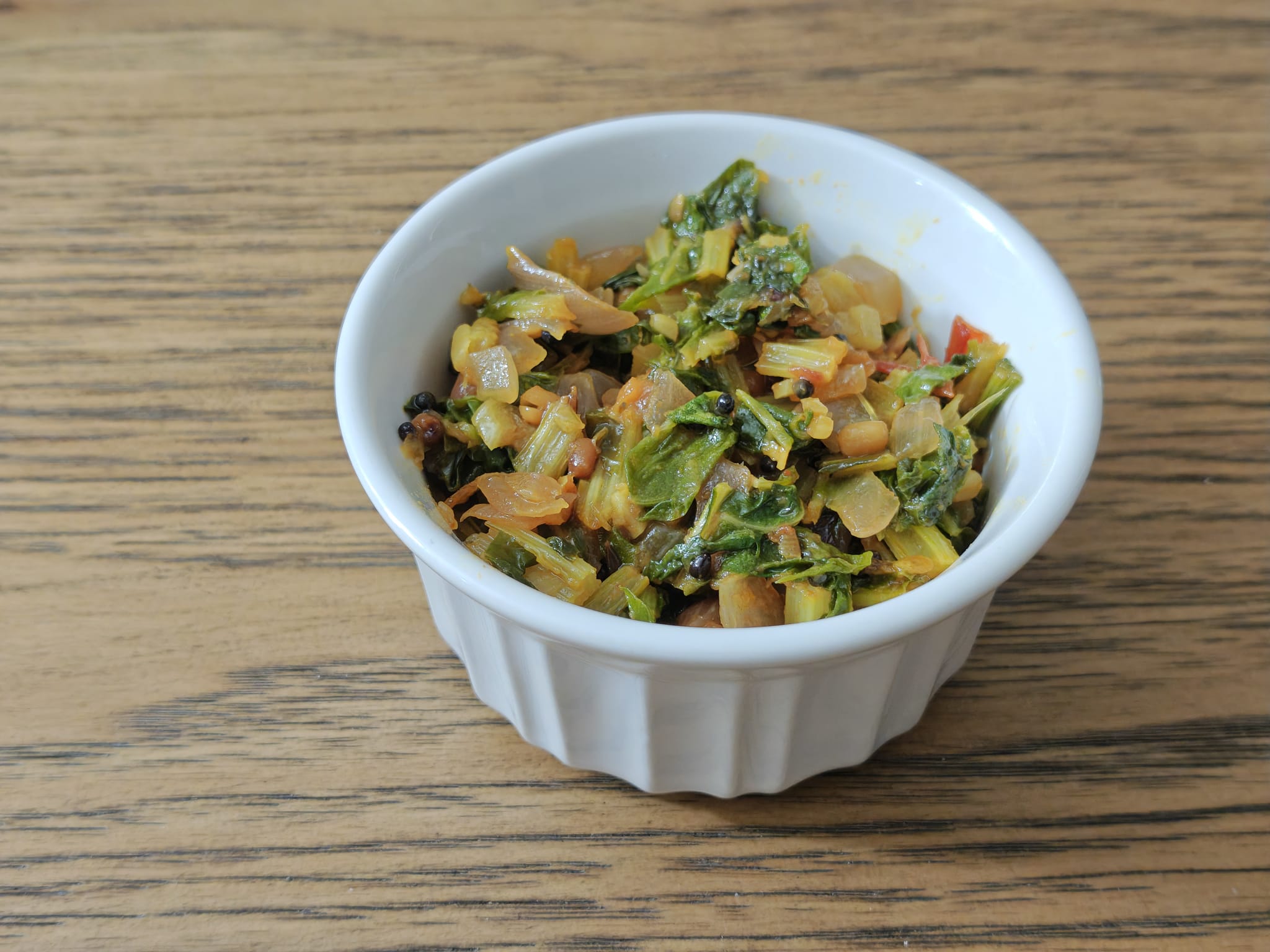
Use Swiss Chard as a Poriyal instead of a salad. Poriyal is a Tamil term for side dish or stir-fry made with vegetable. In this recipe, Swiss chard is cooked the same way as traditional keerai (South Indian leafy greens), bringing familiar flavors to a versatile vegetable. Actually my family is not a fan of green leafy salads. So I am always finding a new ‘recipe’ with the greens available to me.
This South Indian-style The earthy, slightly bitter notes of the chard are beautifully balanced by tempering spices and aromatic garlic flavour. Today, we’re giving this classic dish a nutritious twist by using Swiss chard, a vibrant leafy green packed with vitamins, minerals, and antioxidants.
Growing Swiss Chard in Boston Garden:
In Boston it is not easy to get different types of spinach like in India, but it was easy to grow Swiss Chard in my garden. This is my first time growing chard greens. It is hardy to Boston Zone 4 and so far has been a hassle free with just some simple NPK fertilizer and a little compost. They are supposedto seed themselves and come back next year. I will update this in the garden page next spring
I tend to use the leaves as I would spinach or kale, but that misses the point of those beautiful, colourful stems. I hope you’ll find this delicately spiced curry a delicious way to enjoy the whole chard stalk, from top to bottom.
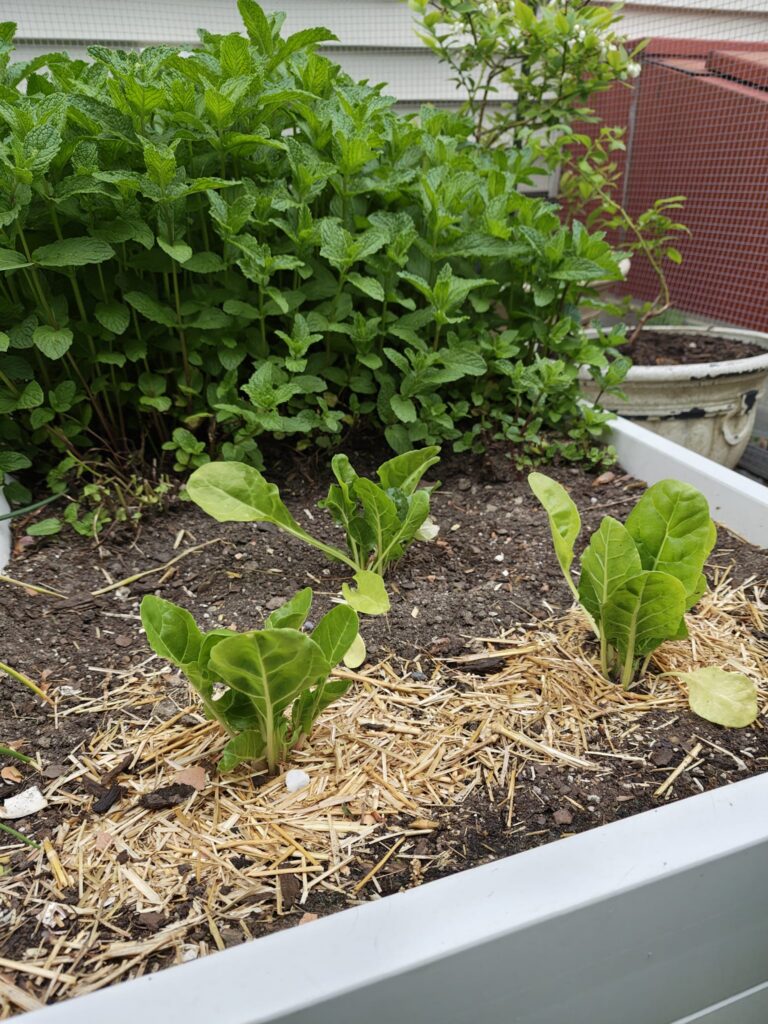
Swiss Chard vs Beet leaves:
Swiss chard is equivalent to Beet leaves in general appearance, but has a very vibrant color – light green stem and wide dark green leaves.
If you’ve never cooked with Swiss chard before, you may be tempted to ditch the stalks and just use the leaves, but you’ll actually use both components in this recipe.
Cutting the Chard Leaves:
-Separate the stem and the leaves. Cut the stem to small pieces.
-Stem takes longer to cook, so add it first to the pan.
-Make lengthwise cuts on the leaf and then do crosswise cuts to get small pieces.
Ingredients and Step by Step Cooking:
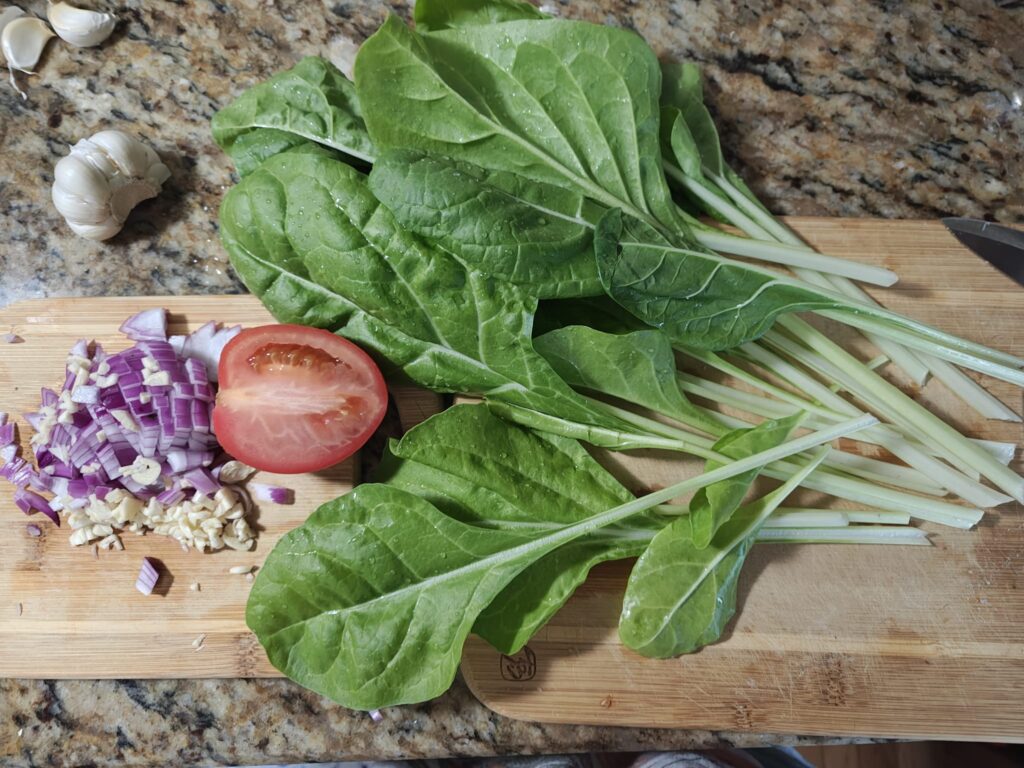
- Oil
- Onion
- garlic
- tomato
- Swiss chard
Tempered with mustard, cumin seeds and asafoetida and then stir-fried with turmeric and chilly powder.
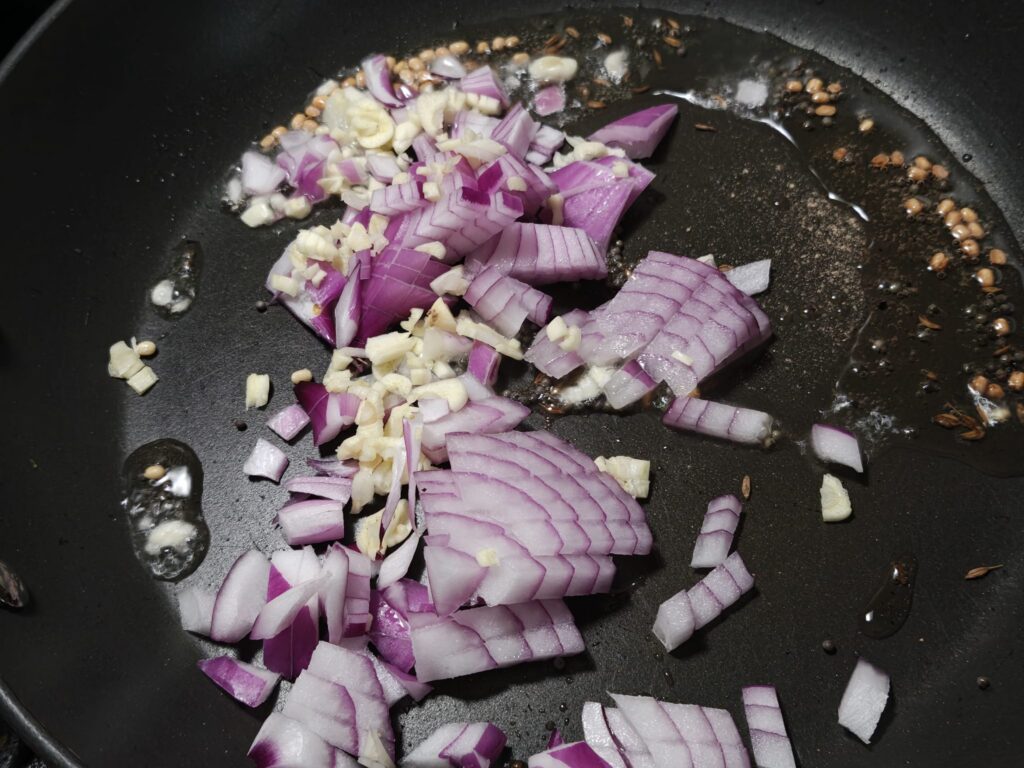
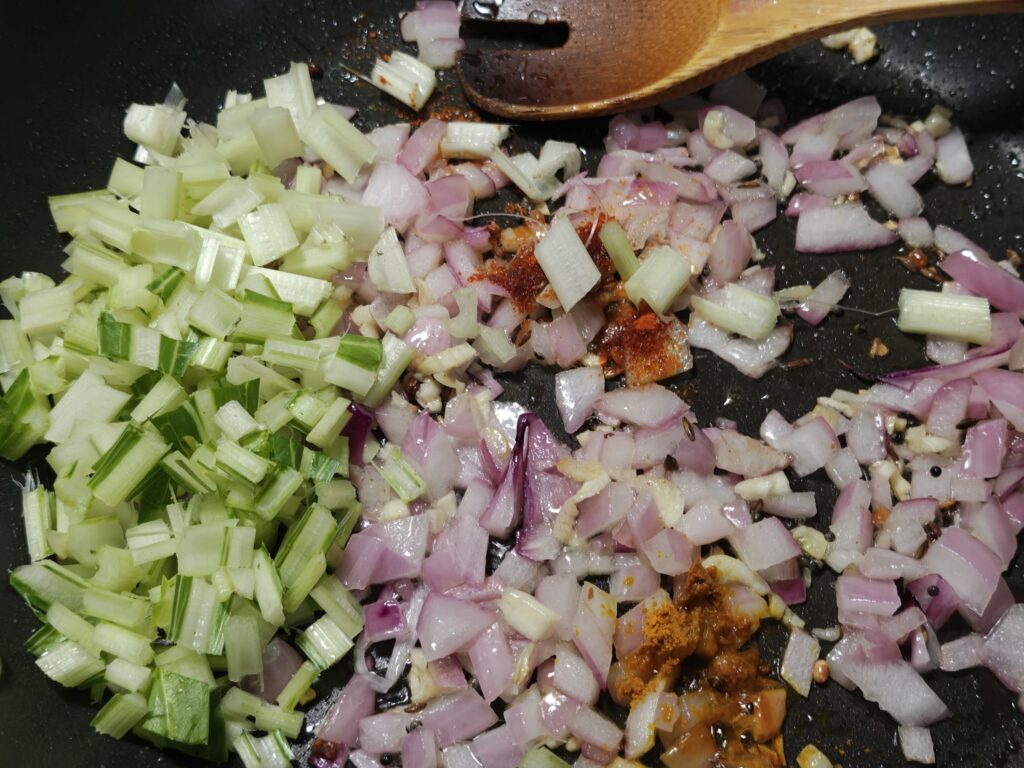
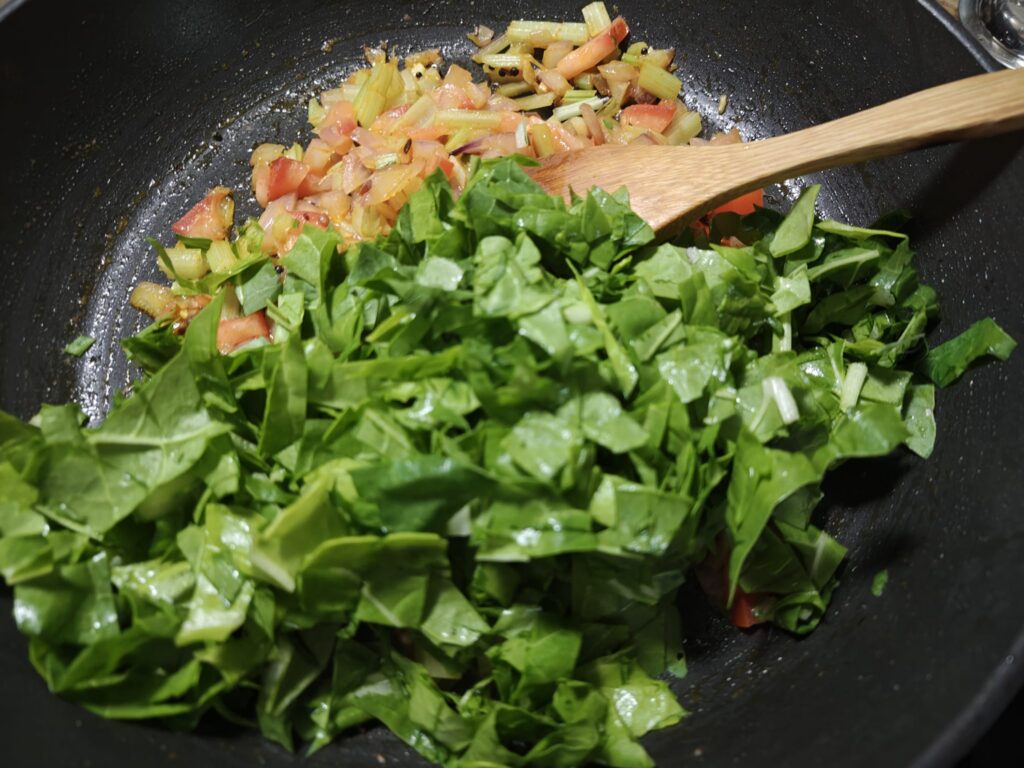
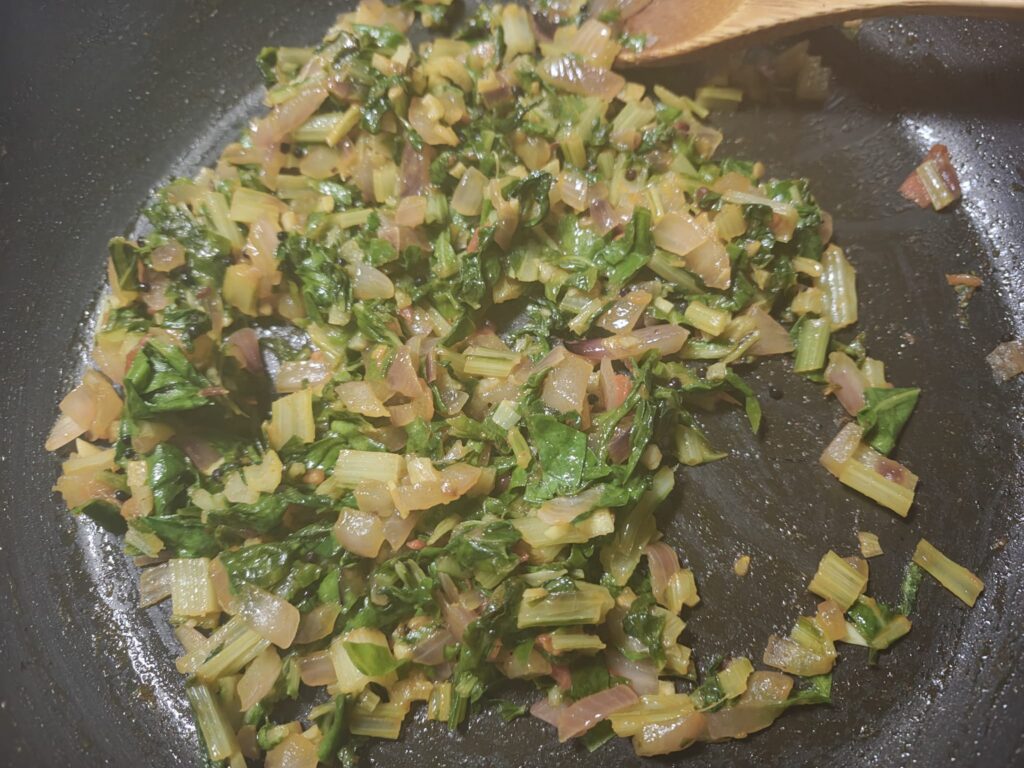
As you can see the green leaves wilted and shrunk.
the stem is still holding its shape and will have a juicy texture.
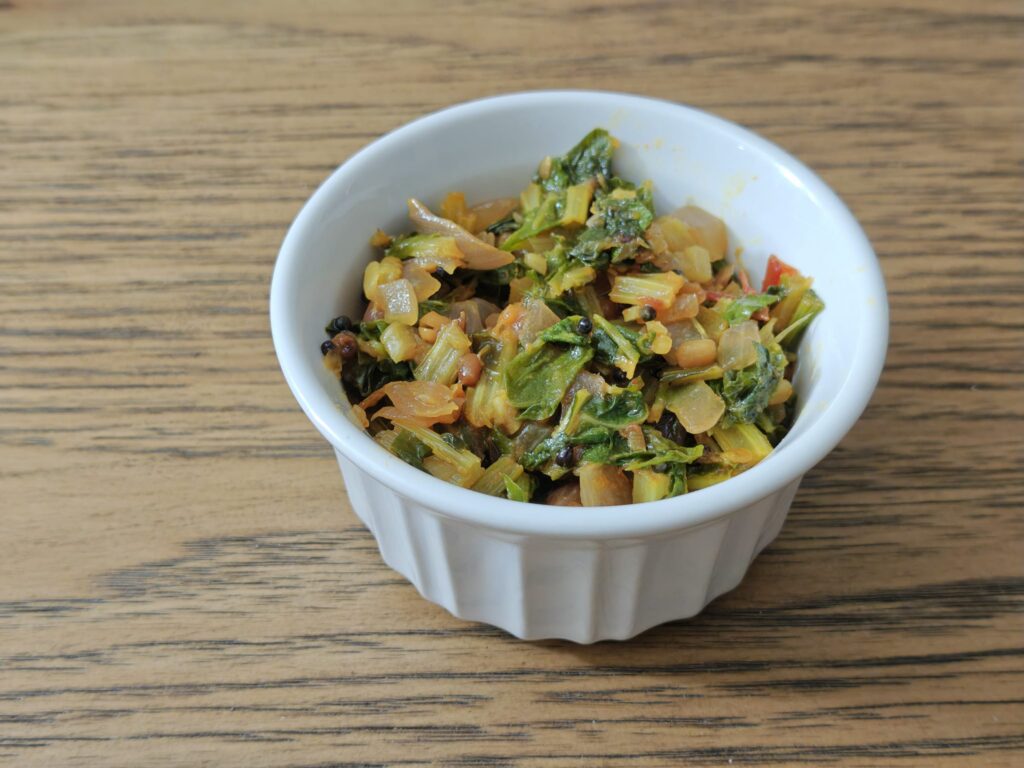
Variations and Chef Tips:
- Do not skip the Garlic and also make sure you do not burn it. So add garlic along with onion or tomato.
- Tomato is optional but adding it boost flavor.
- Using less masalas will bring out the natural flavor of the greens.
- As a finishing touch you can always add 1 to 2 Tbsp of grated coconut. Give it a good stir and turn off the stove
Serving Suggesstions:
- You can enjoy this poriyal with roti or dal (lentil) rice.
- The leftovers taste great for morning breakfast wraps.
- This goes well with some of the south Indian dishes we have share in our website. Check out Lentil and Sambar
Poriyal (Stir-fry) made with Swiss Chard
Ingredients
Equipment
Method
- Heat oil in a kadai or non-stick pan in medium high flame.
- Add mustard first, followed by urad dal, cumin seeds and asafoetida
- Add onion once the urad dal starts to change color. Make sure not to burn the cumin.
- Stir-fry until onion turns soft, add garlic and cut tomato for 1 minute.
- Add the spices and only the stem of the chard. Do not add salt yet. (see notes)
- Sprinkle a little water if too dry. Stir fry for 2 minutes.
- Now add the cut chard leaves and mix it together. (See Notes for cutting tips)
- Add ⅛ cup or less of water to cook the stem.
- Reduce flame to medium low, cover and cook for 3 to 4 minutes
- Now add salt an needed, the leaves will be wilted and the stem will be softened.
- Stir-fry until most or all of the water evapotates.
- Transfer to a heat resistant container.
- Serve with rice and curry or as a salad.
Notes
- Adding Asafoetida to dishes to reduce flatulence and aid digestion.
- Both leaves and the stem of the chard can be used. Young leaves taste sweeter and can be eaten raw. But mature leaves taste a little strong.
- Cutting the Chard Leaves:
- -Separate the stem and the leaves. Cut the stem to small pieces.
- Stem takes longer to cook, so add it first to the pan.
- Make lenghtwise cuts on the leaf and then do crosswise cuts to get small pieces.
- Add Salt in the End: When you cook any type of spinach you should add salt in the end after the leaf wilts, so that your dish doesn’t turn salty.